





This is an adapted excerpt from the Dec. 4 episode of “The Briefing with Jen Psaki.”
On Thursday, the public finally got to see the Pentagon inspector general’s report on the scandal known as Signalgate. The long-awaited report on the administration’s use of the Signal messaging app to send updates about strikes in Yemen was damning for Donald Trump’s defense secretary, Pete Hegseth.
But you wouldn’t know that from the way the Pentagon described the report to its new pro-Trump, pro-Hegseth press corps. According to Ricky Buria, Hegseth’s acting chief of staff, the report “completely exonerated” the secretary of defense “from every allegation that was put out there from the mainstream media on the garbage of Signalgate.”
Buria wasn’t challenged on that statement. In fact, members of the new Pentagon press corps joined in on trashing the “news media.”
So the Pentagon claimed the report totally exonerated the secretary of defense, and the new pro-Trump, pro-Hegseth Pentagon press corps bought that claim without any scrutiny.
I use the word “claim” intentionally here, because if any of the new members of the Pentagon press corps actually read the inspector general’s report, which is available for anyone in the public to read, they would know not only that it confirmed that Hegseth sent sensitive nonpublic information about an upcoming military strike to a Signal group chat from his personal cellphone, but also that in doing so, he “created a risk to operational security that could have resulted in failed U.S. mission objectives and potential harm to U.S. pilots.”
I would not personally call that a complete exoneration for Hegseth.
But beyond the damning top-lines in this report, some of the details struck me as particularly controversial.
First, Hegseth received the classified information about the strike in a temporary sensitive compartmented information facility, or SCIF, at his residence on a military base, alongside multiple aides. That means that Hegseth had plenty of secure communication options he could have used to speak with whomever he wanted.
Instead, he chose to use his personal phone and a group chat that, unbeknownst to him, had a journalist in it.
Second, Hegseth never actually let the inspector general’s office look at his personal phone, and the data his office did provide to the inspector general was incomplete because the group chat was set to autodelete — which, I should note, is illegal for a member of the executive branch.
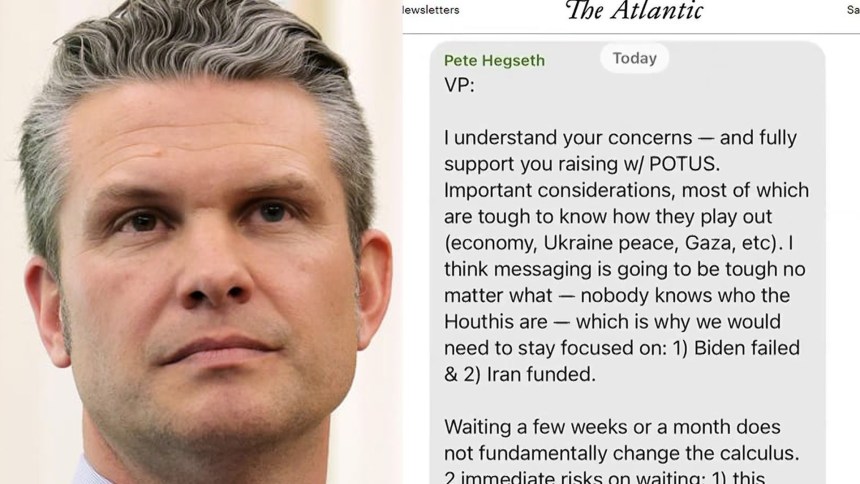
The only actual content from that group chat that the inspector general’s team was able to get their hands on was what The Atlantic published back in March.
So what the inspector general’s report really underscores is the importance of real journalism. The only reason we, the public, know that the secretary of defense put U.S. service members at risk by sharing sensitive details about a military operation is because of the free press.
That is the kind of journalism the American people need — not the Kabuki theater version of a Pentagon press corps inside the building today.
Allison Detzel contributed.

Jen Psaki is the host of "The Briefing with Jen Psaki" airing Tuesdays through Fridays at 9 p.m. EST. She is the former White House press secretary for President Joe Biden.